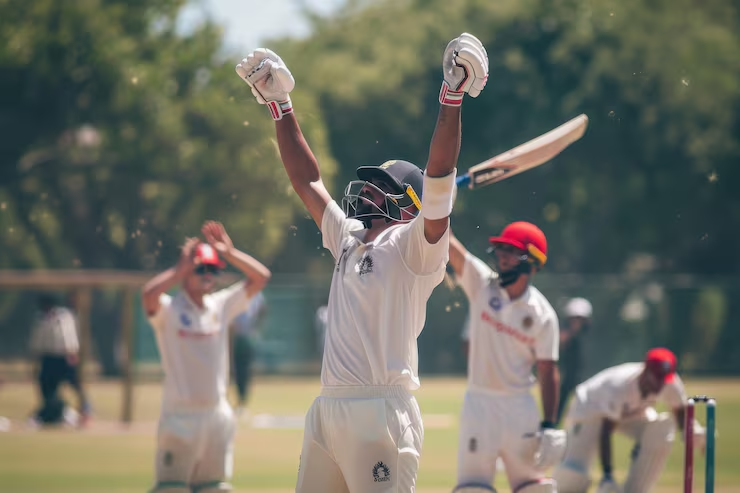
The cricketing contests between the Sri Lanka national cricket team and the India national cricket team have always carried a sense of familiarity and rivalry. Both teams, being subcontinental sides, understand each other’s strengths and weaknesses quite well. This often leads to competitive matches where small moments define the outcome.
In this particular encounter, Sri Lanka showed promise in patches, but India’s experience, depth, and ability to control key phases of the game ensured they came out on top. The match was not entirely one-sided, but India maintained control for most of the game.
Match Overview
| Detail | Information |
|---|---|
| Match | Sri Lanka vs India |
| Format | ODI |
| Venue | International Cricket Stadium |
| Toss | Sri Lanka won the toss, chose to bat |
| Result | India won by 6 wickets |
| Player of the Match | Virat Kohli |
Sri Lanka Innings – A Competitive Total Built in Phases
Sri Lanka’s innings was a mix of caution and controlled aggression. They started slowly, built momentum in the middle overs, but failed to finish strongly.
Sri Lanka Batting Scorecard
| Batsman | Runs | Balls | 4s | 6s |
|---|---|---|---|---|
| Pathum Nissanka | 65 | 80 | 6 | 1 |
| Dimuth Karunaratne | 40 | 60 | 3 | 0 |
| Kusal Mendis | 60 | 55 | 6 | 1 |
| Charith Asalanka | 30 | 28 | 3 | 1 |
| Dasun Shanaka | 25 | 18 | 2 | 1 |
| Others | 30 | — | — | — |
| Total | 250/9 (50 overs) |
Pathum Nissanka once again played the role of an anchor. His innings provided stability at the top and ensured Sri Lanka didn’t lose early wickets.
Kusal Mendis was the aggressor in the middle overs, helping Sri Lanka increase the scoring rate.
Powerplay Phase – Cautious but Safe
Sri Lanka opted for a conservative approach in the powerplay.
- Focus on avoiding early wickets
- Limited boundary hitting
- Gradual scoring
While this approach ensured stability, it also meant that Sri Lanka needed to accelerate later.
Middle Overs – Momentum Building
The middle overs were the most productive phase for Sri Lanka.
Charith Asalanka and Mendis rotated strike effectively and found boundaries when needed.
This phase allowed Sri Lanka to rebuild and push towards a competitive total.
Death Overs – Where the Game Slipped
Despite having a solid platform, Sri Lanka couldn’t finish strongly.
- Wickets fell at regular intervals
- India’s bowlers tightened the lines
- Boundary opportunities reduced
This resulted in a total of 250, which was slightly below par given the platform they had.
India Bowling – Controlled and Clinical
India Bowling Scorecard
| Bowler | Overs | Runs | Wickets | Economy |
|---|---|---|---|---|
| Jasprit Bumrah | 10 | 46 | 3 | 4.6 |
| Mohammed Siraj | 10 | 50 | 2 | 5.0 |
| Kuldeep Yadav | 10 | 44 | 2 | 4.4 |
| Ravindra Jadeja | 10 | 42 | 1 | 4.2 |
Jasprit Bumrah led the attack with precision and control.
India’s bowlers worked as a unit, ensuring Sri Lanka never got away with the game.
India Chase – A Calm and Calculated Approach
Chasing 251, India approached the innings with patience and control.
India Batting Scorecard
| Batsman | Runs | Balls | 4s | 6s |
|---|---|---|---|---|
| Rohit Sharma | 70 | 80 | 8 | 1 |
| Shubman Gill | 55 | 65 | 6 | 1 |
| Virat Kohli | 85 | 95 | 7 | 1 |
| KL Rahul | 20 | 25 | 2 | 0 |
| Hardik Pandya | 15* | 10 | 1 | 1 |
| Total | 252/4 (48 overs) |
Rohit Sharma and Shubman Gill provided a strong start, building a solid opening partnership.
The innings was then anchored by Virat Kohli, who ensured that India remained in control throughout the chase.
Virat Kohli – The Anchor of the Chase
Kohli’s innings was a masterclass in ODI batting.
Key aspects of his performance:
- Smart strike rotation
- Building partnerships
- Playing risk-free cricket
He ensured that India never felt pressure during the chase.
Sri Lanka Bowling – Inconsistent Pressure
Sri Lanka Bowling Scorecard
| Bowler | Overs | Runs | Wickets |
|---|---|---|---|
| Wanindu Hasaranga | 10 | 52 | 2 |
| Dushmantha Chameera | 9 | 48 | 1 |
| Maheesh Theekshana | 10 | 46 | 1 |
| Dasun Shanaka | 8 | 42 | 0 |
Wanindu Hasaranga picked up key wickets but lacked support from the other bowlers.
Sri Lanka struggled to build pressure during partnerships.
Key Moments of the Match
1. Sri Lanka’s Middle Overs Surge
Helped them reach a competitive total.
2. India’s Bowling Discipline
Restricted Sri Lanka effectively.
3. Kohli’s Match-Winning Knock
Controlled the chase.
4. Opening Partnership
Set the tone for India’s innings.
Tactical Breakdown
India Strategy
- Controlled bowling
- Build partnerships
- Maintain steady chase
Sri Lanka Strategy
- Conservative start
- Middle overs acceleration
- Defensive bowling
India executed their strategy more effectively.
Strengths & Weaknesses
India Strengths
- Strong batting depth
- Excellent chase management
- Disciplined bowling
Sri Lanka Strengths
- Balanced batting lineup
- Competitive middle overs
Sri Lanka Weaknesses
- Weak finishing
- Lack of sustained pressure
- Inconsistent bowling
Player of the Match – Virat Kohli
Virat Kohli delivered a composed and match-winning performance.
What This Match Indicates
For the India national cricket team:
- Strong depth and balance
- Ability to chase comfortably
- Consistent execution
For the Sri Lanka national cricket team:
- Competitive but inconsistent
- Needs better finishing
- Must improve bowling under pressure
Detailed Phase Analysis
Batting Comparison
Sri Lanka had a decent total but lacked a strong finish. India paced their chase perfectly.
Bowling Comparison
India maintained control throughout, while Sri Lanka struggled to apply pressure.
Game Awareness
India showed superior awareness and execution in key moments.
Final Thoughts
The match between the Sri Lanka national cricket team and the India national cricket team once again demonstrated the importance of execution in modern cricket.
Sri Lanka showed promise but couldn’t capitalize on key phases.
India, with their experience and composure, handled pressure effectively and secured a comfortable victory.
In the end, it was a well-deserved win for India, underlining their dominance and consistency in international cricket.